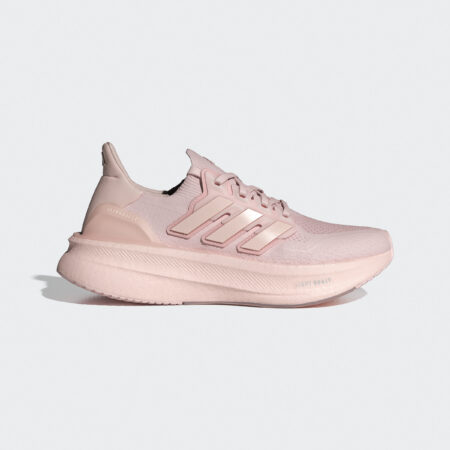
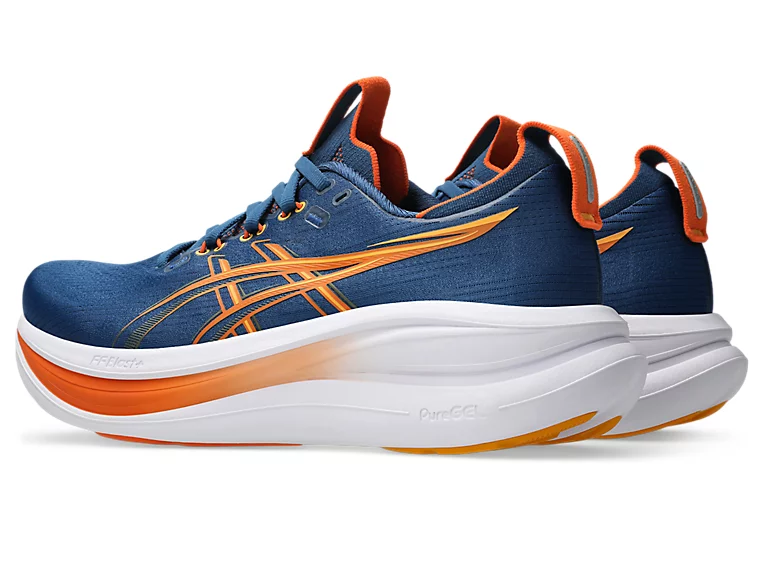
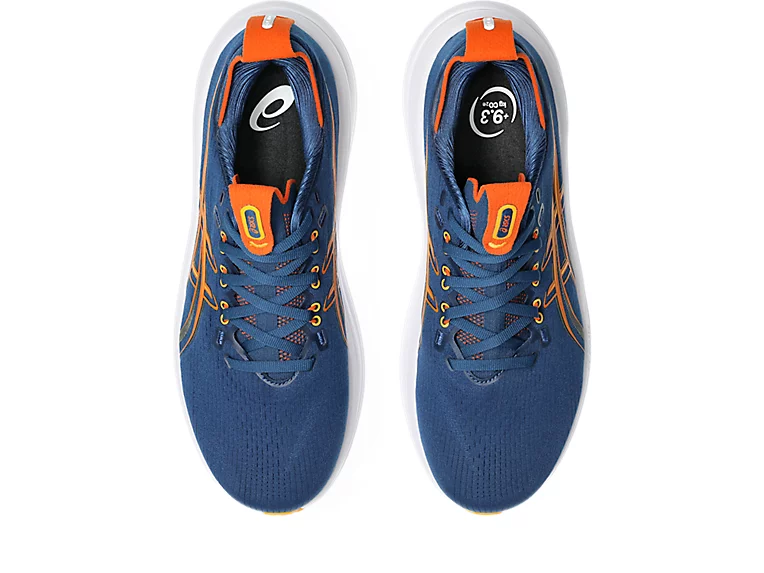
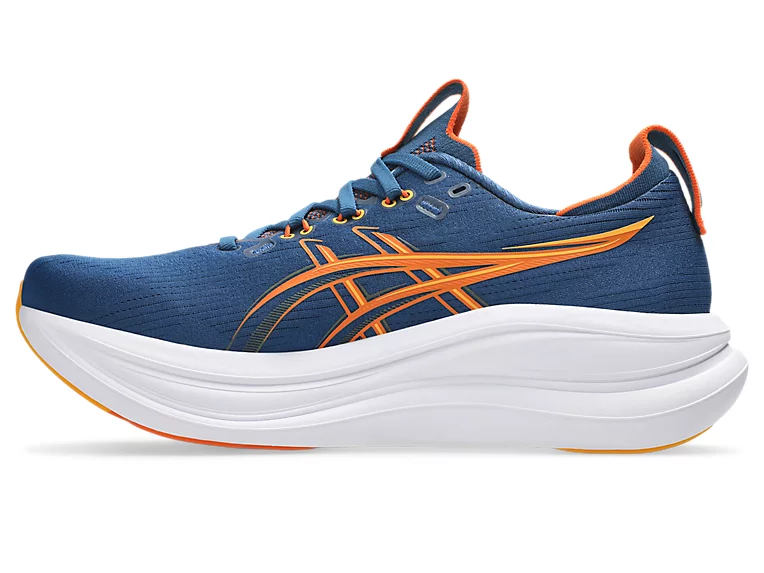
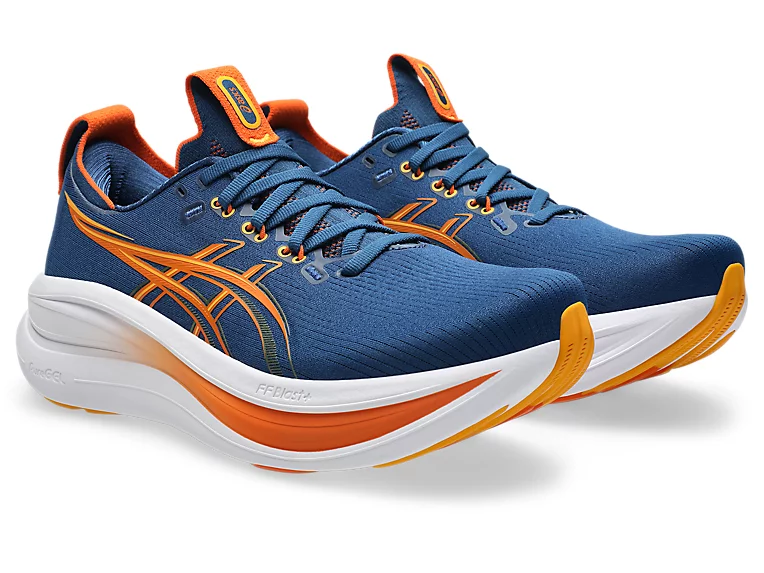
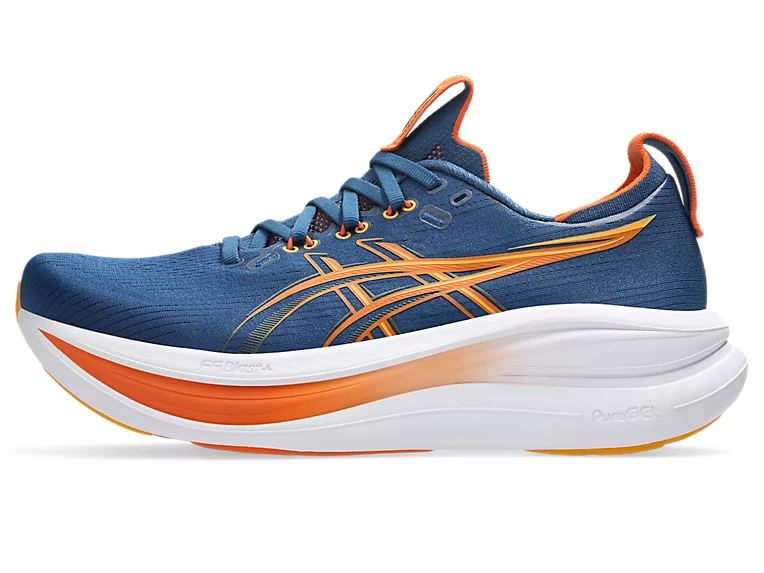
The GEL-NIMBUS® 28 shoe is one of the most comfortable styles in the ASICS® running shoe range. Approximately 20g lighter than the previous version, this shoe continues to offer excellent cushioning to make running longer distances feel smoother.
The midsole features a combination of FF BLAST™ PLUS cushioning and PureGEL® technology. These components help create a lightweight and soft cushioning experience that feels like you’re landing on clouds.
The upper is constructed with an engineered knit material that softly wraps your feet and keeps them comfortable.
Cushion
Maximum
Heel Drop
8 mm
Weight
281 g/9.9 oz
Support
Neutral, Neutral
Materials & Technology
Engineered knit upper
A lightweight, breathable knit material that reduces the need for additional overlays.
PureGEL® technology
Softer, updated version of our GEL® technology that maintains all the acclaimed properties that have made GEL® technology famous. Approximately 65% softer vs standard GEL® technology.
FF BLAST™ PLUS cushioning
Midsole foam that provides a blend of cloud like cushioning and a responsive ride that is lighter than FF BLAST™.
OrthoLite™ X-55 sockliner
Premium sockliner that provides cushioning performance and moisture management for a cooler, dryer environment.
Reflective details
Visibility for enhanced nightime and early-morning reflective brightness.
HYBRID ASICSGRIP™ outsole
Combines ASICSGRIP™ rubber and AHARPLUS™ materials to help provide advanced grip for various terrains and advanced durability.
At least 75% of the shoe’s main upper material is made with recycled content to reduce waste and carbon emissions.
The sockliner is produced with the solution dyeing process that reduces water usage by approximately 33% and carbon emissions by approximately 45% compared to the conventional dyeing technology.
Neutral Pronation
Foot Type
Normal size arches
Push Off
There is even distribution from the front of the foot.
Considered Injuries
Less likely due to effective shock absorption, but neutral runners are not immune to injury.
How your foot contacts the ground
The foot lands on outside of the heel, then rolls inward (pronates) to absorb shock and support body weight.
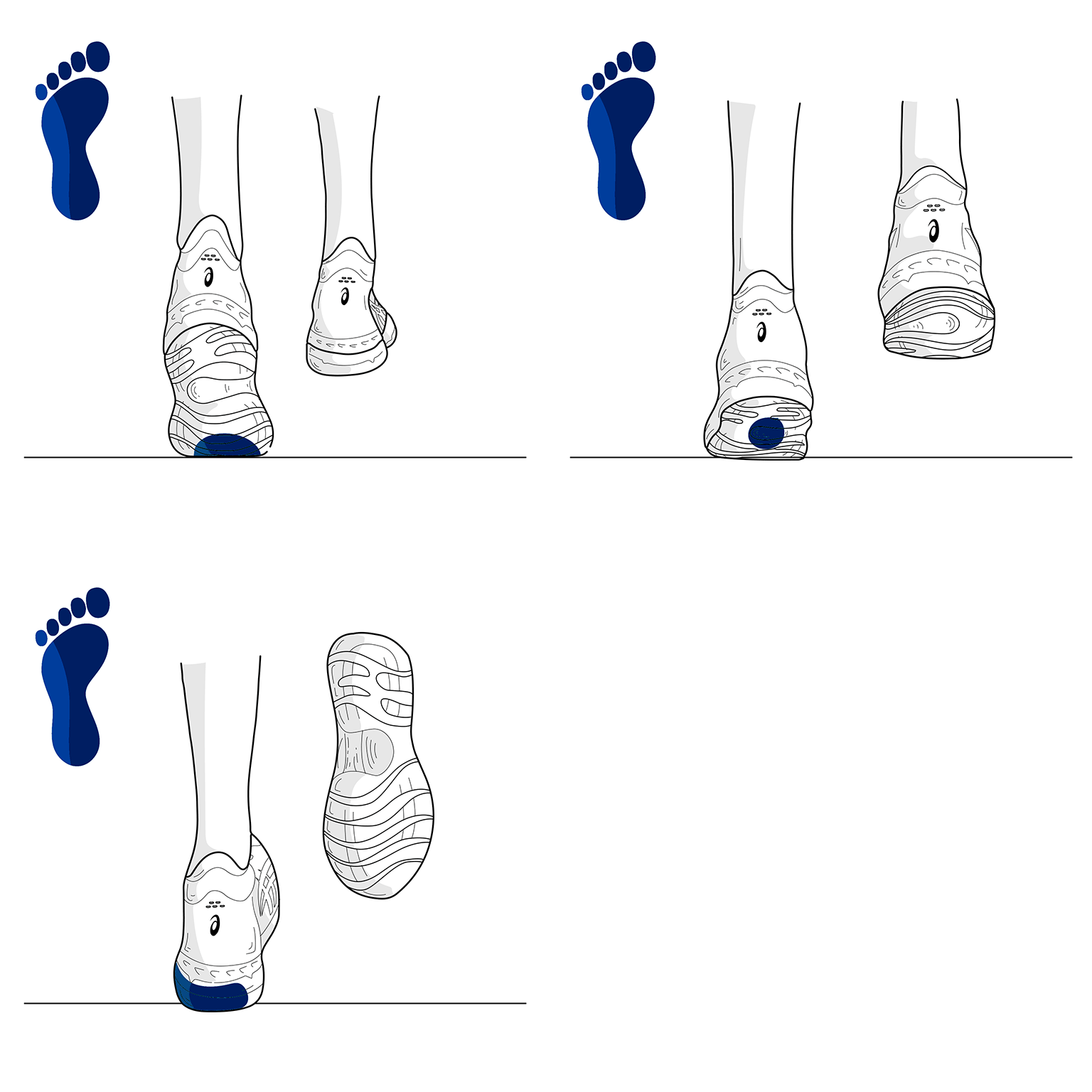
Neutral Pronation
Foot Type
Normal size arches
Push Off
There is even distribution from the front of the foot.
Considered Injuries
Less likely due to effective shock absorption, but neutral runners are not immune to injury.
How your foot contacts the ground
The foot lands on outside of the heel, then rolls inward (pronates) to absorb shock and support body weight.
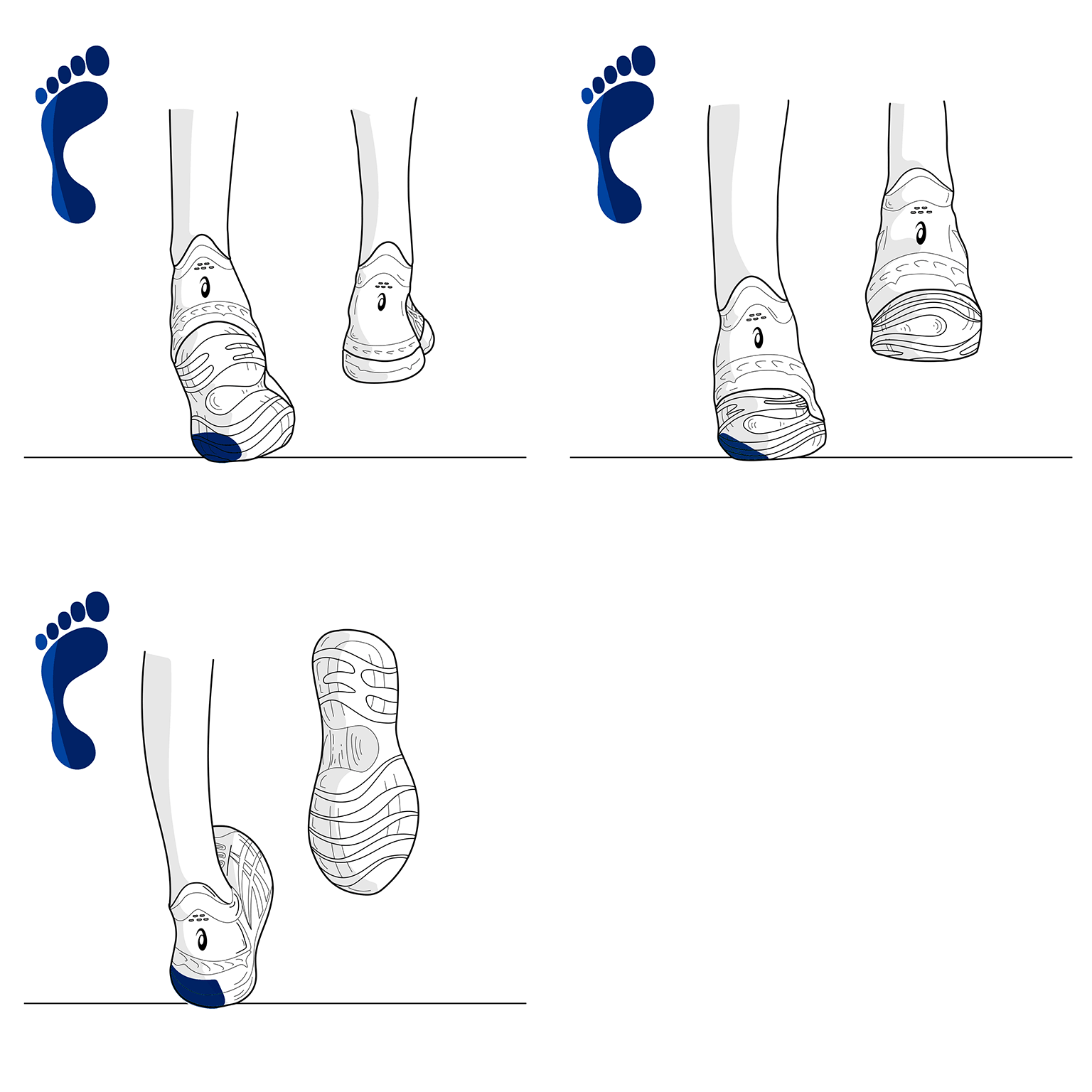
Underpronation
Foot Type
High arches
Push Off
The pressure is on smaller toes on outside of foot.
Considered Injuries
Plantar fasciitis, shin splints, ankle strain.
How your foot contacts the ground
The outer side of the heel hits the ground at an increased angle with little or no normal pronation, causing a large transmission of shock through the lower leg.